
Why is Shoulder important ?
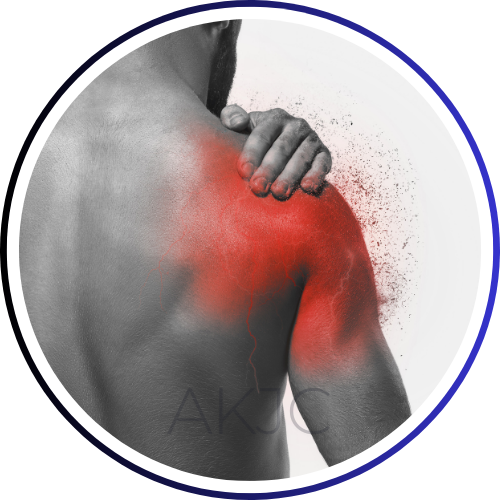
The shoulder is the most mobile joint in the human body, allowing you to lift, rotate, and reach freely. Because of this wide range of motion, it is also vulnerable to injury, wear, and instability.
As a Shoulder Specialist in Indore, Dr. Anupam Khandelwal frequently treats a wide range of shoulder conditions affecting patients of all ages. Below is a clear overview of common shoulder diseases, injuries, and fractures, grouped by anatomical regions for better understanding and easier diagnosis.
Shoulder Joint (Glenohumeral Joint) Conditions
This is the main ball-and-socket joint of the shoulder, connecting the humeral head and the glenoid cavity. It allows maximum movement but is prone to instability and degeneration.
Common Diseases / Disorders
Osteoarthritis of Shoulder
Wear and tear of cartilage causing stiffness and pain.
Rheumatoid Arthritis
Autoimmune inflammation leading to deformity.
Avascular Necrosis (AVN) of Humeral Head
Loss of blood supply to bone leading to collapse.
Frozen Shoulder (Adhesive Capsulitis)
Stiffness and pain with restricted movement.
Shoulder Instability / Dislocation
Repeated slipping out of the joint, common in young athletes.
Labral Tear (Bankart / SLAP Lesion)
Cartilage rim injury causing clicking and instability.
Post-Traumatic Arthritis
Degeneration after an untreated injury or fracture.
Common Fractures
Proximal Humerus Fracture
Common in elderly falls; may need fixation or replacement.
Head-Splitting Humeral Fracture
Severe fracture involving joint surface.
Anatomic Neck / Surgical Neck Fracture
Common in osteoporotic patients.
Rotator Cuff & Surrounding Tendon Disorders
The rotator cuff is a group of four tendons that stabilize and move the shoulder. These are the most frequently injured structures in the joint.
Rotator Cuff Tear (Partial / Complete)
Due to aging, overuse, or trauma.
Subacromial Bursitis
Inflammation of the bursa leading to shoulder impingement.
Tendinopathy / Overuse Injury
Common in athletes and manual workers.
Common Fractures
Greater Tuberosity Fracture
Often associated with rotator cuff injury.
Lesser Tuberosity Fracture
Affects internal rotation strength.
Acromioclavicular (AC) Joint Conditions
Common Diseases / Disorders
This small joint connects the collarbone (clavicle) to the shoulder blade (acromion) and provides overhead stability.
AC Joint Osteoarthritis
Wear and tear due to repetitive lifting or aging.
Distal Clavicle Osteolysis
Seen in weightlifters due to overuse.
Common Fractures
Lateral End Clavicle Fracture
Often needs surgical stabilization.
Scapula (Shoulder Blade) & Surrounding Region
The scapula supports shoulder movement and provides muscle attachments for strength and stability.
Common Diseases / Disorders
Scapulothoracic Bursitis (“Snapping Scapula”)
Grinding or popping sound near the shoulder blade.
Winged Scapula
Muscle or nerve weakness causing protruding shoulder blade
Muscle Imbalance / Postural Shoulder Pain
Seen in desk workers and athletes.
Common Fractures
Glenoid Cavity Fracture
Involves the socket part of the joint.
Acromion Fracture
Upper part of scapula; may accompany other injuries.
Nerve & Soft Tissue Related Shoulder Problems
The shoulder’s movement depends heavily on nerve and soft tissue coordination.
Common Diseases / Disorders
Axillary Nerve Injury
Weakness in shoulder abduction post dislocation.
Suprascapular Nerve Entrapment
Causes dull pain and weakness in shoulder blade area.
Myofascial Pain Syndrome
Trigger points around shoulder and neck.
Pediatric & Congenital Shoulder Disorders
When to See Dr. Anupam Khandelwal
If you experience shoulder pain, stiffness, weakness, or deformity after an injury, early evaluation is essential. As a trusted Shoulder Specialist in Indore, Dr. Anupam Khandelwal offers advanced 3D imaging, arthroscopic (keyhole) shoulder surgery, and minimally invasive fracture fixation techniques to accurately diagnose and treat shoulder conditions. His goal is to help patients regain strength, mobility, and function as quickly and safely as possible.
Tags - Shoulder , Indore , Dr. Anupam Khandelwal
shoulder pain treatment in indore,
best shoulder doctor in indore,
shoulder specialist in indore,
shoulder surgeon in indore,
shoulder arthroscopy in indore,
rotator cuff repair surgery in indore,
frozen shoulder treatment in indore,
shoulder injury treatment in indore,
shoulder joint pain doctor indore,
shoulder surgery hospital in indore,
frozen shoulder doctor near me,
rotator cuff tear treatment indore,
shoulder stiffness treatment indore,
calcific tendinitis shoulder treatment indore,
shoulder dislocation treatment indore,
shoulder ligament injury treatment indore,
chronic shoulder pain treatment indore,
shoulder impingement treatment indore,
minimally invasive shoulder surgery indore,
keyhole shoulder surgery indore,
shoulder arthroscopy surgeon near me,
shoulder injection treatment indore,
non surgical shoulder pain treatment indore,
Dr Anupam Khandelwal shoulder specialist indore,