
Elbow Pain & Injury Care in Indore
Elbow Pain Treatment
The elbow is formed by the humerus, ulna and radius, and is important for lifting, gripping, rotation and daily hand function.
Elbow pain can come from tendon overuse, bursitis, nerve compression, arthritis, stiffness, sports overload, dislocation or fracture.
After a fall, accident, sudden swelling, deformity or inability to rotate the forearm, early assessment is important because elbow fractures can affect joint surface, stability and long-term range of motion.
Common Elbow Conditions Treated
Patients may search for elbow pain, swelling, stiffness, numbness, locking or injury. The diagnosis is narrowed by examination and imaging.
Tendinopathy
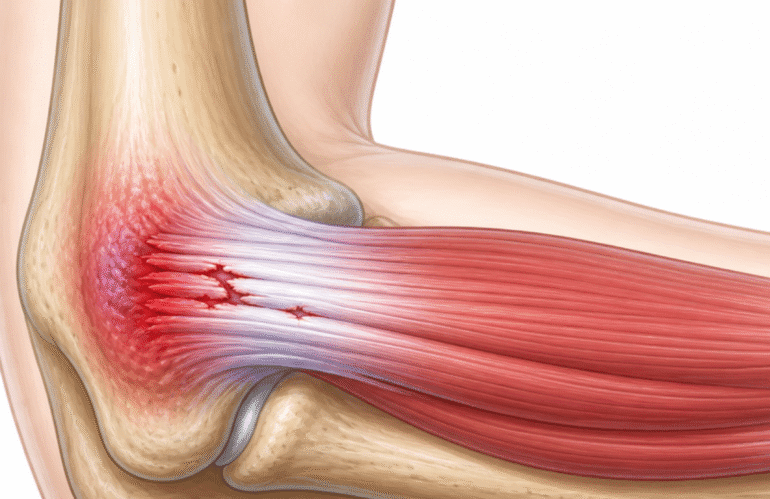
Lateral epicondylitis (tennis elbow), medial epicondylitis (golfer elbow), distal biceps tendinopathy and triceps tendinopathy.
Bursitis
Olecranon bursitis at the back of the elbow, including aseptic bursitis and suspected septic bursitis.
Nerve problems
Cubital tunnel syndrome / ulnar neuropathy, radial tunnel syndrome and posterior interosseous nerve entrapment.
Arthritis
Primary osteoarthritis, post-traumatic arthritis, rheumatoid or inflammatory arthritis and septic arthritis.
Trauma - fractures
Radial head or neck fracture, olecranon fracture, coronoid fracture and distal humerus fracture.
Trauma - instability
Simple elbow dislocation, terrible triad injury, posterolateral rotatory instability and valgus instability / UCL injury.
Mechanical problems
Loose bodies, osteochondral lesion / OCD of capitellum, synovial plica, locking and catching.
Stiffness
Post-traumatic elbow stiffness, contracture and heterotopic ossification after injury or surgery.
Sports and overuse
Thrower elbow, UCL injury, valgus-extension overload and Little League elbow in adolescents.
Pediatric elbow injuries
Supracondylar humerus fracture, lateral condyle fracture, medial epicondyle fracture, pulled elbow and developmental deformity.
Less common but important
Infection, gout or tophi, tumors and referred pain from cervical spine or shoulder.
Fracture and trauma care
Elbow Fractures and Dislocations Need Early Assessment
Elbow fractures may appear small on initial X-ray but can involve the joint surface, block forearm rotation or make the elbow unstable. CT scan is often useful when fracture pattern, fragment size, comminution, depression or surgical reconstructability must be understood.
Understanding the Elbow Joint
The elbow works as a hinge and pivot joint, allowing bending, straightening, supination and pronation.
Bones
- Distal humerus - Forms the upper side of the elbow joint.
- Proximal ulna and olecranon - Form the hinge surface and triceps insertion.
- Radial head and neck - Important for forearm rotation and elbow stability.
Important Elbow Structures
- Common extensor origin at the lateral epicondyle and common flexor origin at the medial epicondyle.
- Ulnar collateral ligament complex and lateral collateral ligament complex for stability.
- Ulnar nerve in the cubital tunnel, radial nerve / posterior interosseous nerve and anterior neurovascular structures.
- Olecranon bursa and articular cartilage of the humeroulnar, radiocapitellar and proximal radioulnar joints.
Symptoms That Help Localize the Elbow Problem
Instead of repeating every diagnosis, this section helps patients understand what symptom pattern should be assessed.
Symptoms Patients Notice
- Outer elbow pain during gripping, lifting or twisting.
- Inner elbow pain during resisted wrist movement or throwing activity.
- Swelling over the back of the elbow.
- Numbness or tingling toward the ring and little fingers.
- Locking, catching, clicking or sudden loss of motion.
Warning Signs
- Pain after fall, road traffic accident or sports injury.
- Visible deformity, rapid swelling or bruising.
- Inability to bend, straighten, rotate the forearm or use the hand normally.
- Numbness, weakness, cold hand or increasing pain.
- Fever, redness or painful swelling suggesting infection.
Persistent pain, swelling, numbness, locking or post-injury restriction should be assessed before stiffness becomes established.
How Elbow Pain and Injury Are Evaluated
The same symptom can come from tendon, nerve, cartilage, ligament or fracture pathology. Examination and the right imaging prevent guesswork.
Clinical Examination
- Pain location: lateral, medial, posterior or deep joint pain.
- Range of motion: bending, straightening, pronation and supination.
- Grip strength, resisted wrist movement, biceps/triceps strength and tenderness points.
- Nerve examination for ulnar, radial and median nerve symptoms.
- Stability assessment when dislocation, ligament injury or sports overload is suspected.
Imaging and Tests
- X-ray - AP, lateral and oblique views for fracture, arthritis, dislocation and alignment.
- CT scan - Useful for joint depression, fragment size, comminution and surgical planning after fracture.
- MRI or ultrasound - Selected use for tendon, ligament, cartilage or nerve-related problems.
- Blood tests - Considered when infection, gout or inflammatory arthritis is suspected.
In fracture cases, CT scan can change the plan from simple immobilization to fixation, reconstruction or replacement when the joint surface is affected.
Elbow Pain Treatment Options
Treatment depends on diagnosis, duration of symptoms and functional limitation.
Non-Surgical Care
- Rest, activity modification and ergonomic changes.
- Medicines, topical pain relief and swelling control.
- Physiotherapy for mobility, strengthening and gradual return to work or sport.
- Elbow strap, brace or protected splinting where appropriate.
Procedures and Surgery
- PRP injection for selected resistant tendon pain.
- Fracture fixation for displaced or unstable elbow fractures.
- Radial head reconstruction or radial head replacement for selected fracture patterns.
- Loose body removal, ligament repair / reconstruction or contracture release when indicated.
When Does an Elbow Fracture Need Surgery?
The decision is made after clinical examination and imaging. The goal is to restore joint congruity, stability and early safe movement where possible.
Decision Factors
- Amount of displacement, articular step or gap.
- Number, size and reconstructability of fracture fragments.
- Elbow instability, dislocation or ligament injury.
- Mechanical block to bending, straightening, pronation or supination.
- Age, activity demands, bone quality and associated injuries.
Recovery Priorities
- Stable fixation can allow early protected elbow movement in selected cases.
- Elbow stiffness prevention is a major part of treatment planning.
- Physiotherapy timing depends on fracture stability, fixation quality and soft tissue healing.
- Recovery timelines differ for tendon, nerve, ligament, fracture and replacement cases.
Book Consultation
Book an elbow pain consultation
Book a consultation if elbow pain affects lifting, grip, typing, sports or daily work.
Urgent consultation is advisable after a fall, accident, swelling, deformity, numbness, locking or inability to rotate the forearm.
The first step is correct diagnosis, then choosing the least invasive treatment that can restore comfortable hand function and elbow motion.