
Hip Replacement
Hip Replacement Surgery in Indore
A modern guide for patients considering hip replacement for arthritis, AVN, fracture-related damage or severe hip pain.
When hip replacement helps
Pain, limp, stiffness and loss of daily function despite appropriate treatment.
Technique planning
Implant, approach and bearing choice are individualized after examination and imaging.
Hip replacement cost
Review implant, hospital, insurance and estimate factors before surgery.
View cost guideWalking and rehab
Most patients need planned physiotherapy, precautions and follow-up after surgery.
Who may need hip replacement?
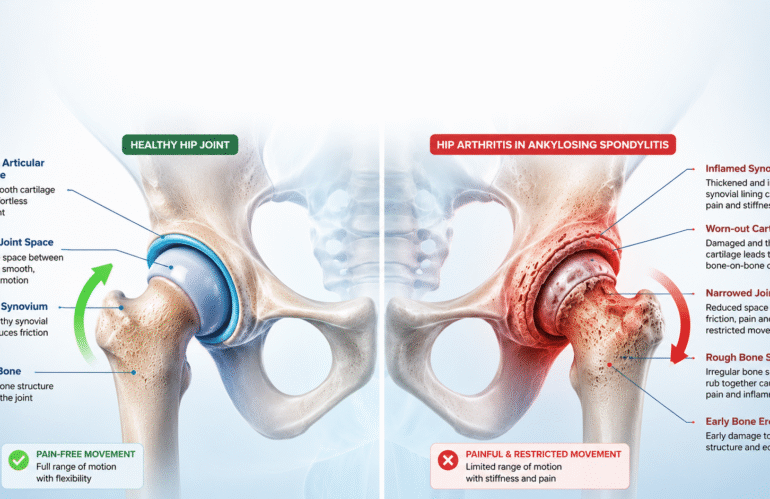
Hip replacement is considered when the joint damage is advanced and daily life is significantly affected.
Common reasons
- Advanced osteoarthritis.
- Avascular necrosis with collapse.
- Rheumatoid or inflammatory arthritis.
- Fracture-related hip damage.
Symptoms
- Groin or thigh pain while walking.
- Night pain or rest pain.
- Stiffness while sitting, bending or wearing footwear.
- Limping or reduced walking distance.
Surgical planning and implant choice
Good planning reduces surprises and helps set realistic expectations.
Pre-surgery workup
- X-ray templating and deformity review.
- Fitness assessment and blood tests.
- Diabetes, BP and infection-risk optimization.
Related options
- Direct anterior approach where suitable.
- Ceramic or advanced bearing discussion.
- Revision planning if previous surgery has failed.
Recovery after hip replacement
Recovery depends on age, diagnosis, muscle strength and medical fitness.
Early recovery
- Pain control and assisted walking.
- DVT prevention and wound care.
- Hip precautions according to surgical approach.
Follow-up
- Physiotherapy for gait and strength.
- Return-to-work planning.
- Long-term implant monitoring when needed.
Next Step
Book an orthopedic consultation
Share your symptoms, reports and treatment history so the team can guide the next step.