
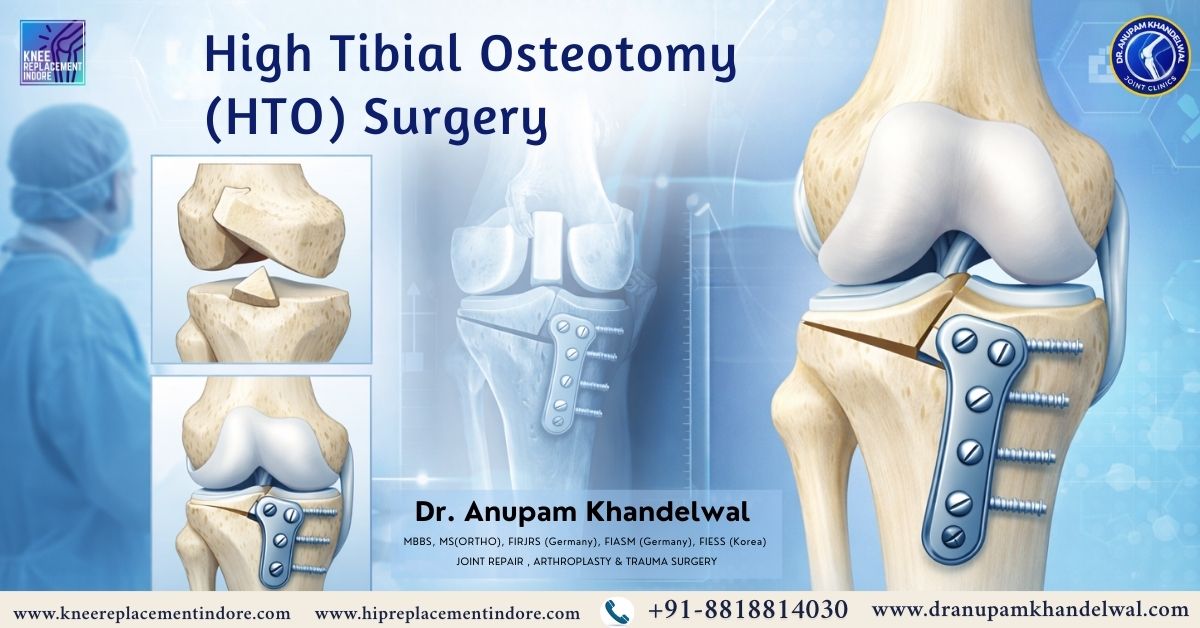
Knee pain is one of the most common orthopedic problems seen in young and middle-aged adults. In many cases, the pain develops due to uneven pressure inside the knee joint. When this happens, one side of the knee wears out faster than the other. Instead of immediately opting for joint replacement, a joint-preserving procedure called High Tibial Osteotomy surgery in Indore can help correct the alignment of the knee and relieve pain.
This procedure is particularly useful for patients who are active and relatively young. By shifting the body weight from the damaged part of the knee to the healthier side, the surgery allows the joint to function better and may delay the need for knee replacement for many years.
High Tibial Osteotomy: A Joint-Preserving Solution for Knee Pain
High Tibial Osteotomy (HTO) is a knee realignment surgery performed to correct the mechanical axis of the leg. In simple terms, the upper part of the tibia (shin bone) is reshaped so that body weight shifts away from the damaged area of the knee.
Many patients with bow legs or early arthritis experience increased pressure on the inner side of the knee. Over time, this pressure leads to cartilage damage and persistent pain.
Through knee alignment correction surgery in Indore, the load is redistributed across the knee joint. As a result, the healthier cartilage takes more load, reducing pain and slowing down arthritis progression.
Because of this reason, HTO for early knee arthritis is often considered a good option for younger and active patients.
Why Does Knee Misalignment Cause Pain?
The knee joint functions best when body weight is evenly distributed. However, certain conditions can disturb this balance. Common reasons include:
- Bow legs (varus deformity)
- Early cartilage wear
- Sports injuries affecting alignment
- Meniscus damage
- Long-standing ligament injuries
When alignment changes, excessive stress develops on one side of the knee joint. Over time this leads to cartilage degeneration and arthritis. This is where osteotomy for knee pain becomes an effective treatment because it corrects the root cause rather than simply treating symptoms.
When is High Tibial Osteotomy Recommended?
Doctors usually recommend High Tibial Osteotomy surgery in Indore for specific groups of patients. This procedure may be advised when:
- Arthritis affects only one compartment of the knee
- The patient has bow legs or misalignment
- Age is typically below 55–60 years
- The patient leads an active lifestyle
- Knee ligaments are reasonably stable
- Pain persists despite physiotherapy or injections
In many such situations, HTO for bow legs can significantly improve knee mechanics and allow patients to return to daily activities with less pain. Therefore, understanding when high tibial osteotomy is recommended is important before considering joint replacement.
High Tibial Osteotomy vs Knee Replacement
One of the most common questions patients ask is about HTO vs knee replacement. Both procedures treat knee arthritis, but the goals are different.
High Tibial Osteotomy
- Preserves the natural knee joint
- Corrects alignment of the leg
- Ideal for younger patients
- Allows higher activity levels
- Delays need for joint replacement
Knee Replacement
- Artificial joint replaces damaged cartilage
- Usually recommended for advanced arthritis
- More suitable for older patients
For many active individuals, alternatives to knee replacement in young patients such as osteotomy can be beneficial because they maintain natural joint function.
How the Surgery Works
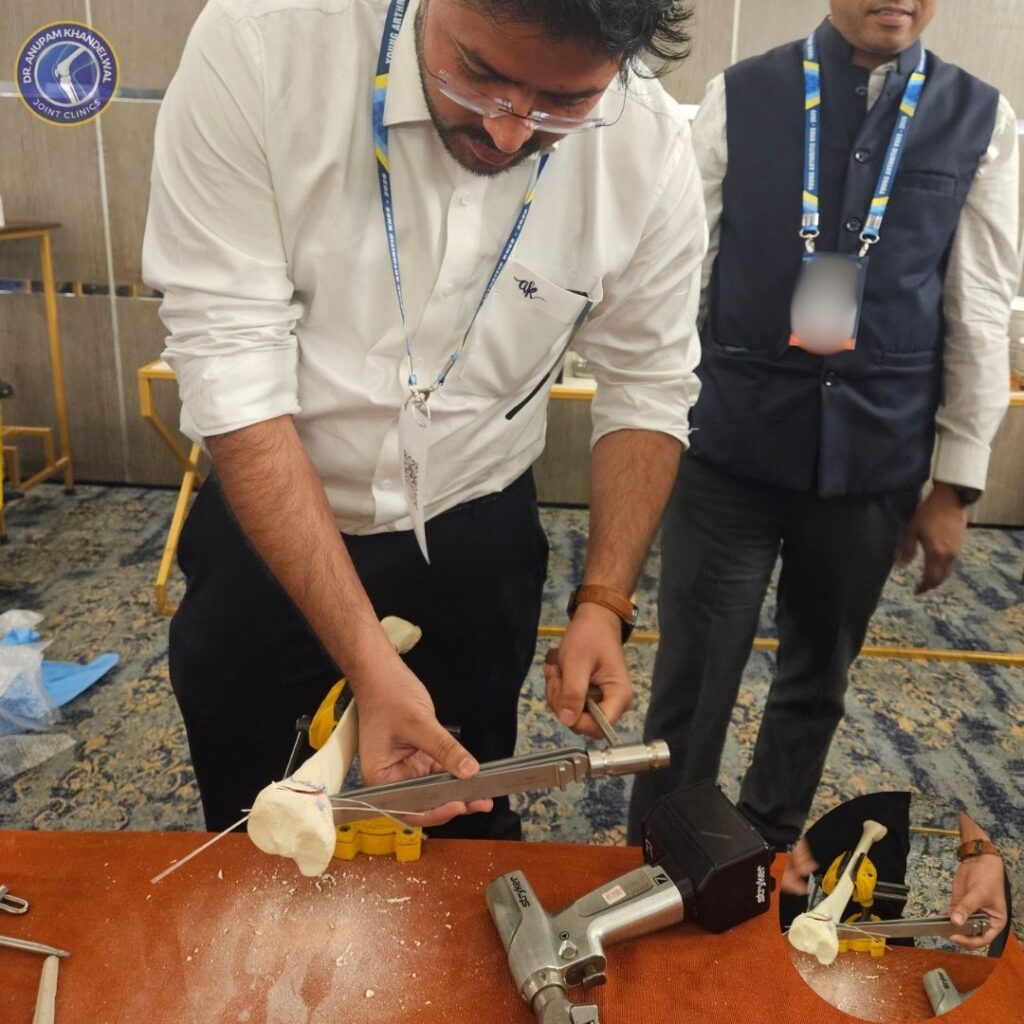
During HTO surgery in Indore, the surgeon creates a controlled cut in the upper tibia. The bone is then slightly opened or closed depending on the correction required. A specialized plate and screws are used to hold the bone in the new position.The goals of the procedure include:
- Correcting leg alignment
- Shifting weight away from damaged cartilage
- Reducing pain
- Improving knee stability
Over time, the bone heals in the corrected position, allowing the knee to function more efficiently.
Recovery After Knee Osteotomy Surgery
Recovery from knee osteotomy surgery in Indore usually takes a few months, but the timeline varies depending on patient health and rehabilitation. Typical recovery steps include:
First few weeks
- Controlled weight bearing
- Controlled weight bearing
- Knee movement exercises
4–8 weeks
- Progressive physiotherapy
- Muscle strengthening
- Gradual return to walking
3–6 months
- Improved mobility
- Return to most daily activities
- Better knee stability
Physiotherapy plays a very important role in recovery because strong muscles support the corrected knee alignment.
Why High Tibial Osteotomy is Useful for Younger Patients
High Tibial Osteotomy is particularly beneficial for younger and active patients who have early-stage knee arthritis or bow legs. Instead of immediately undergoing joint replacement, this joint preserving knee surgery helps correct the alignment of the leg and reduces pressure on the damaged part of the knee. As a result, pain decreases and the natural knee joint continues to function better. In many cases, High Tibial Osteotomy surgery in Indore can delay the need for knee replacement by 8–10 years or even longer, allowing patients to maintain an active lifestyle during their most productive years.
Benefits of High Tibial Osteotomy
When performed for the right patient, this joint preserving knee surgery offers several advantages. Key benefits include:
- Pain reduction
- Improved knee function
- Preservation of natural joint
- Delay in knee replacement surgery
- Ability to maintain active lifestyle
Many patients who undergo knee realignment surgery can continue activities such as walking, cycling, and moderate sports.
Why Many Patients from Nearby Cities Visit Indore
Indore has become a growing center for orthopedic care in central India. Patients often travel from Bhopal, Ujjain, Ratlam, Khandwa, and Khargone seeking advanced treatment options.
Several reasons contribute to this trend:
- Availability of specialized orthopedic procedures
- Access to modern surgical techniques
- Experienced surgeons performing knee preservation surgeries
- Comprehensive rehabilitation facilities
Many patients who undergo knee realignment surgery can continue activities such as walking, cycling, and moderate sports.
About Dr. Anupam Khandelwal
Dr. Anupam Khandelwal is an orthopedic surgeon based in Indore with a special interest in knee preservation procedures, sports injury management, and advanced arthroscopic surgery.
His approach focuses on preserving the natural joint whenever possible. Procedures such as HTO surgery in Indore, meniscus repair, hip preservation surgery, and arthroscopy are performed with the goal of restoring function and delaying joint replacement.
Patients from across Madhya Pradesh, including Bhopal, Ratlam, and Ujjain, visit his clinic for evaluation and treatment of complex knee problems.
Frequently Asked Questions (FAQ)
What is the purpose of High Tibial Osteotomy?
The main goal is to correct knee alignment and shift body weight away from the damaged cartilage to reduce pain and slow arthritis progression.
Who is a good candidate for HTO surgery?
Younger, active patients with early knee arthritis affecting only one side of the knee and with bow-leg deformity are usually ideal candidates.
How long does recovery take after HTO?
Initial recovery usually takes 6–8 weeks, while full functional recovery may take around 3–6 months depending on rehabilitation.
Can High Tibial Osteotomy delay knee replacement?
Yes. In many cases, the procedure can postpone knee replacement surgery for several years.
Is HTO a permanent solution?
It improves knee alignment and pain for many years, but arthritis progression may eventually require further treatment in some patients.
How long does High Tibial Osteotomy surgery take?
The procedure usually takes about 1.5 to 2 hours, depending on the degree of correction required. Patients may stay in the hospital for a few days for monitoring and early rehabilitation.
When can I start walking after HTO surgery?
Most patients begin partial weight-bearing walking with support within a few days after surgery. Full weight bearing is usually allowed gradually after proper healing and physiotherapy.
Is High Tibial Osteotomy painful?
Some discomfort is expected after surgery, but pain is usually manageable with medications and physiotherapy. As healing progresses, many patients experience significant relief from their previous knee pain.
Can I return to sports after HTO surgery?
Many patients can return to low-impact activities such as cycling, swimming, and brisk walking once recovery is complete. However, high-impact sports may need to be avoided depending on individual recovery.
How successful is High Tibial Osteotomy?
When performed for the right patient, knee osteotomy surgery in Indore has good long-term results. Many patients experience pain relief, improved knee function, and delayed need for knee replacement surgery.
Hindi Summary (संक्षिप्त सार)
High Tibial Osteotomy एक ऐसी सर्जरी है जिसमें टिबिया (पिंडली की हड्डी) की एलाइनमेंट को बदला जाता है ताकि घुटने के खराब हिस्से पर पड़ने वाला दबाव कम हो सके। यह सर्जरी खासकर उन मरीजों के लिए उपयोगी होती है जिनमें घुटने के अंदरूनी हिस्से में शुरुआती आर्थराइटिस या bow legs की समस्या होती है।
इस प्रक्रिया में हड्डी को काटकर उसकी दिशा थोड़ी बदली जाती है और प्लेट-स्क्रू से फिक्स किया जाता है। इससे घुटने का वजन स्वस्थ हिस्से पर शिफ्ट हो जाता है और दर्द कम होता है।
कई मामलों में यह सर्जरी घुटना बदलने (knee replacement) की आवश्यकता को कई सालों तक टाल सकती है।
Summary in Swahili
High Tibial Osteotomy ni upasuaji wa kurekebisha mpangilio wa mfupa wa tibia ili kupunguza presha kwenye sehemu iliyoharibika ya goti. Upasuaji huu husaidia kubadilisha mwelekeo wa uzito wa mwili kutoka upande ulioathirika kwenda upande wenye afya zaidi.
Kwa wagonjwa wenye arthritis ya mapema au bow legs, njia hii inaweza kupunguza maumivu na kuboresha uwezo wa kutembea. Mara nyingi hutumika kama mbadala wa kubadilisha goti kwa wagonjwa vijana.
Kwa kurekebisha mpangilio wa goti, upasuaji huu unaweza kusaidia kuhifadhi kiungo cha asili kwa muda mrefu.