
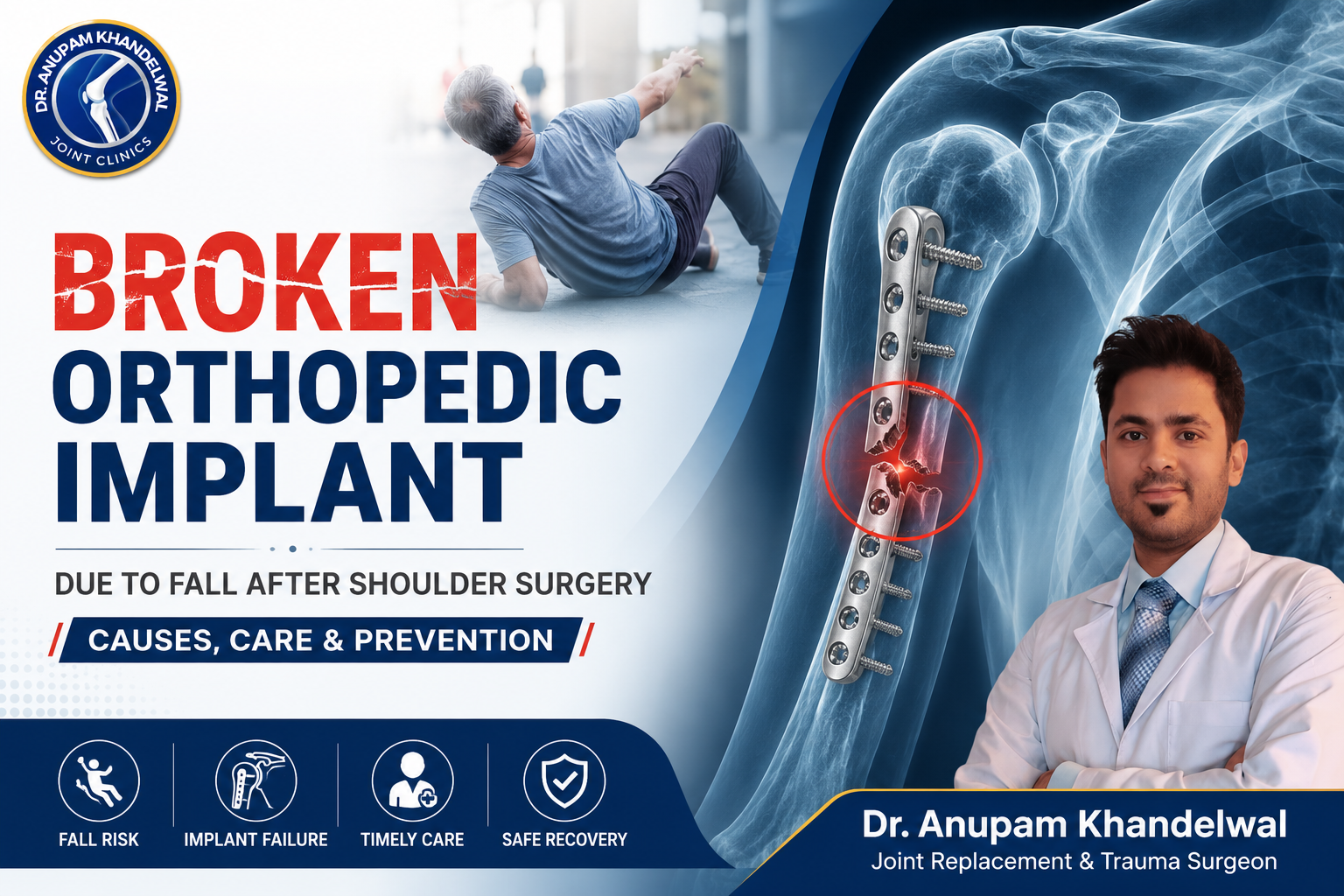
Shoulder surgery can significantly improve pain and mobility. However, recovery does not end in the operating theatre. One serious but often overlooked complication is a Broken Orthopedic Implant, particularly after a fall during the recovery period.
In cities like Indore, Bhopal, and Ujjain, I often see patients who undergo successful shoulder surgery but later develop complications due to accidental falls or not following recommended precautions. Therefore, understanding why a Broken Orthopedic Implant can occur and, more importantly, how to help reduce the risk is essential for a safe and successful recovery.
What is a Broken Orthopedic Implant?
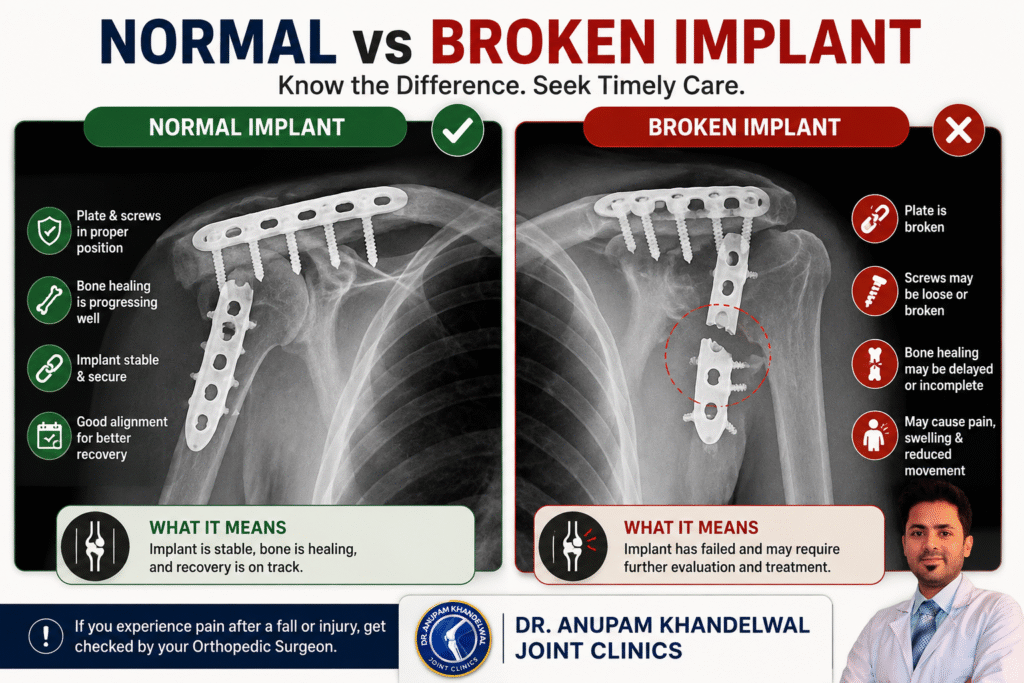
An orthopedic implant is a medical device, such as a plate, screw, or prosthesis, that is used to stabilize broken bones or support joints during the healing process. However, if excessive force is applied, such as during a fall, the implant may bend, loosen, or break.
Although orthopedic implants are made from strong materials like titanium or stainless steel, they are not indestructible. Therefore, following your surgeon’s post-operative instructions and taking appropriate precautions during recovery play a crucial role in protecting the implant and supporting successful healing.
Why Do Shoulder Implants Break?
Several factors can contribute to a Broken Orthopedic Implant. Most importantly, a fall after shoulder surgery is one of the leading causes. In addition, the following factors may increase the risk of implant failure:
- Sudden trauma or a fall after surgery
- Poor bone quality (osteoporosis)
- Early excessive shoulder movement or lifting heavy weights
- Delayed bone healing or infection
- Implant fatigue over time
In many patients from Madhya Pradesh, particularly older adults with reduced bone strength or osteoporosis, the risk of implant failure may be higher. Therefore, following your surgeon’s advice and taking appropriate precautions during recovery are essential to help protect the implant and support proper healing.
What Are the Symptoms of a Broken Implant?
Recognizing the symptoms of a Broken Orthopedic Implant early can help prevent further damage and allow timely treatment. Common warning signs include:
- Sudden increase in shoulder pain
- Swelling or inflammation around the shoulder
- Reduced shoulder movement or stiffness
- Abnormal clicking, grinding, or a feeling of instability
- Visible shoulder deformity in severe cases
If you notice any of these symptoms after a fall, do not ignore them. Instead, consult an orthopedic surgeon as soon as possible for a thorough evaluation. Early diagnosis and appropriate treatment can help reduce the risk of further complications and support a better recovery.
What Causes Orthopedic Implant Failure Besides a Fall?
Although a fall is one of the most common causes of a Broken Orthopedic Implant, it is not the only reason. In some cases, implant failure can occur due to underlying medical conditions, delayed healing, or excessive stress on the implant. Therefore, understanding these risk factors is equally important.
1. Delayed Bone Healing (Delayed Union)
When a fracture takes longer than expected to heal, the implant continues to bear most of the body’s stress. As a result, prolonged loading may increase the risk of implant fatigue and eventual breakage.
2. Non-Union
Non-union occurs when the fractured bone fails to heal completely. In such cases, the implant provides ongoing support for a longer period, which may increase the likelihood of loosening or breaking over time.
3. Infection
An infection around the surgical site can weaken the surrounding bone and soft tissues. Consequently, the implant may lose adequate support, increasing the risk of implant failure if not treated promptly.
4. Osteoporosis
Osteoporosis reduces bone density and strength, making it more difficult for the bone to securely hold plates and screws. Therefore, patients with osteoporosis may have a higher risk of implant-related complications.
5. Smoking
Smoking can reduce blood flow and slow bone healing. In addition, it increases the risk of delayed union, non-union, and infection, all of which may contribute to implant failure.
6. Poor Bone Quality
Some individuals have naturally weaker bone quality because of age-related changes, nutritional deficiencies, or certain medical conditions. As a result, the implant may not receive sufficient support during the healing process.
7. Excessive Early Activity
Returning to heavy lifting, overhead movements, or strenuous activities before the bone has healed completely can place excessive stress on the implant. Therefore, it is important to follow your surgeon’s rehabilitation plan carefully.
8. High-Impact Trauma
A road traffic accident, sports injury, or another significant fall can generate enough force to bend, loosen, or break even a strong orthopedic implant.
Although not every patient with these risk factors will experience a Broken Orthopedic Implant, recognizing and managing them can help reduce the risk of complications. Regular follow-up visits, appropriate rehabilitation, and following your orthopedic surgeon’s advice play an important role in protecting the implant and supporting successful recovery.
How Do We Diagnose a Broken Shoulder Implant?
Diagnosis is usually straightforward but must not be delayed.
- X-ray – First and most important test
- CT Scan – For detailed implant assessment
- Physical examination – To evaluate movement and pain
Early diagnosis helps in planning the right treatment and avoiding complications.
Treatment Options for Broken Shoulder Implants
Treatment depends on the severity of damage.
- Type of implant
- Degree of bone healing
- Age & activity of patient
- Amount of damage
1. Revision Surgery
This is the most common treatment.
We remove the broken implant and use a stronger, new plate or screw system—sometimes with bone grafting for better strength.
2. Bone Grafting
If healing is poor or bone quality is weak, bone graft is used to enhance recovery.
3. Physiotherapy After Surgery
Once the bones heal and implant stabilizes, physiotherapy helps regain:
- Strength
- Mobility
- Confidence
- Shoulder function
How to Avoid Falls After Shoulder Surgery
Prevention is always better than revision surgery.
- Keep your home clean, well-organized, and free of clutter.
- Use anti-slip mats in bathrooms and other wet areas.
- Avoid walking on wet or slippery floors.
- Wear well-fitting, non-slip footwear both indoors and outdoors.
- Follow your physiotherapy and rehabilitation guidelines as advised by your orthopedic surgeon.
- Do not lift heavy weights or perform strenuous activities until your surgeon allows you to do so.
- Use a walking aid or take support while walking if you feel unsteady or have difficulty maintaining your balance.
Most importantly, patients should not rush recovery. Healing takes time.
Importance of Physiotherapy in Preventing Implant Failure
Physiotherapy plays a crucial role in recovery after shoulder surgery. In fact, some cases of a Broken Orthopedic Implant may be associated with inadequate rehabilitation, improper shoulder movements, or returning to activities too early during the healing phase. Therefore, following a structured physiotherapy program is an important part of a safe recovery.
After surgery, the muscles around the shoulder often become weak and stiff due to pain, reduced movement, and the healing process. However, guided physiotherapy helps restore muscle strength, flexibility, joint mobility, and coordination. As a result, it improves shoulder function, reduces the risk of falls, and helps protect the orthopedic implant during recovery. Benefits of Physiotherapy After Shoulder Surgery
- Improves muscle strength around the shoulder joint.
- Enhances balance and coordination, helping reduce the risk of falls.
- Prevents shoulder stiffness and frozen shoulder.
- Teaches safe movement patterns during the recovery period.
- Builds confidence while performing daily activities.
- Gradually restores shoulder mobility and function.
- Supports proper healing while reducing unnecessary stress on the implant.
In addition, it is important to perform only the exercises recommended by your orthopedic surgeon or physiotherapist. Avoid self-directed exercises or strenuous shoulder movements, as these may place excessive stress on the healing bone and increase the risk of a Broken Orthopedic Implant.
FAQ (Frequently Asked Questions)
1. Can an implant break easily after surgery?
No, but a fall or excessive stress can cause failure.
2. Is revision surgery always required?
Not always. Mild cases may be treated without surgery.
3. How long does recovery take after revision surgery?
Usually 3–6 months depending on the condition.
4. Can elderly patients avoid this complication?
Yes, with proper precautions and support.
5. Is physiotherapy necessary?
Absolutely. It improves strength and prevents falls.
6. What should I do immediately after a fall?
Avoid movement and consult an orthopedic doctor immediately.
7. Are implants permanent?
Most are long-lasting but may need revision in rare cases.
8. Does bone quality affect implant success?
Yes, poor bone quality increases risk of failure.
9. Can I walk normally after shoulder surgery?
Yes, but carefully and with precautions.
10. Where can I get treatment in Madhya Pradesh?
Specialized orthopedic care is available in Indore and nearby cities.
About Dr. Anupam Khandelwal
Dr. Anupam Khandelwal is a leading orthopedic surgeon based in Indore, specializing in joint replacement, sports injuries, and advanced shoulder surgeries. With extensive experience and a patient-first approach, he provides reliable and personalized care across Indore, Bhopal, and nearby regions of Madhya Pradesh.
Hindi Summary (हिंदी सारांश)
कंधे की सर्जरी के बाद गिरने से Broken Orthopedic Implant एक गंभीर समस्या हो सकती है। इसके लक्षणों में दर्द, सूजन और मूवमेंट में कमी शामिल हैं। सही समय पर जांच और इलाज बहुत जरूरी है। गिरने से बचाव के लिए सावधानी, फिजियोथेरेपी और नियमित फॉलोअप जरूरी है।
Swahili Summary
Baada ya upasuaji wa bega, kuanguka kunaweza kusababisha Broken Orthopedic Implant. Dalili ni pamoja na maumivu makali na kushindwa kusogeza bega vizuri. Uchunguzi wa mapema na matibabu sahihi ni muhimu. Kuzuia kuanguka na kufuata maelekezo ya daktari husaidia kuzuia matatizo.