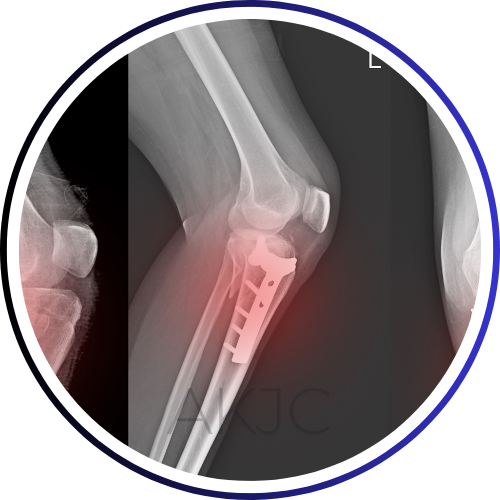
Limb Deformity & Alignment Correction

Deformity Correction Surgery in Indore

Consultation for limb deformity correction, post-traumatic deformity, malunion, bow leg, knock knee, shortening, rotation problems and complex limb alignment planning.

Deformity Correction Surgery in Indore
Keyword

Deformity correction surgery Indore

For visible limb bending, shortening, rotation or walking imbalance.

Keyword

Post traumatic deformity correction Indore

For deformity after accident, malunion or failed previous fracture treatment.

Keyword

Bow leg and knock knee correction Indore

For selected alignment problems after clinical and X-ray assessment.

Problems

Types of deformity evaluated

Deformity correction needs full-limb assessment, not just a small local X-ray.

Common deformities

  • Post-traumatic limb deformity after fracture.
  • Malunion where bone healed in poor alignment.
  • Bow leg or knock knee alignment issues.
  • Limb shortening or length difference.
  • Rotational deformity or foot progression problem.
  • Deformity with non-union or bone infection history.

Patient concerns

  • Limping or uneven walking.
  • Pain in knee, ankle, hip or back from poor alignment.
  • Difficulty standing or working for long hours.
  • Visible bending or shortening.
  • Fear that deformity will worsen over time.
Planning

How deformity correction is planned

The goal is to understand the exact level, direction and size of deformity before recommending treatment.

Assessment

  • Clinical gait and limb alignment exam.
  • Full-length standing X-rays where needed.
  • Comparison of both limbs.
  • Joint movement and muscle strength review.
  • CT scan in selected complex rotational deformities.

Treatment goals

  • Improve mechanical alignment.
  • Reduce pain related to abnormal loading.
  • Improve walking and limb function.
  • Correct shortening where suitable.
  • Protect nearby joints where possible.
Methods

Gradual or acute correction options

Some deformities are corrected at one surgery, while others need gradual correction with a frame or rail system.

Possible methods

  • Osteotomy and internal fixation in selected cases.
  • Ilizarov circular frame for gradual correction.
  • Rail fixator or LRS where suitable.
  • Bone transport or lengthening in selected complex cases.
  • Staged correction when infection or non-union is present.
Recovery

Recovery after deformity correction

Recovery depends on the type of correction, fixation method, bone healing and physiotherapy.

During recovery

  • Regular X-rays and alignment checks.
  • Frame or wound care instructions.
  • Physiotherapy for joints and muscles.
  • Gradual weight-bearing as advised.
  • Monitoring for infection, nerve symptoms or swelling.

Expectations

  • Correction may take weeks or months in gradual methods.
  • Some patients need multiple stages.
  • Follow-up discipline is essential.
  • The plan should be individualized after examination and imaging.

Next Step

Book deformity correction consultation

Bring full records of the original injury, old X-rays, recent X-rays and details of any previous surgery or infection.

Book

Book Consultation

✕
⚡ LIMITED SLOTS

Get expert advice from India's leading Knee, Hip & Orthopedic Surgeon

🏆 International Training From Germany & Korea
✔ Trusted by 10,000+ patients from India