
Fracture and Injury Care
Bone Fracture Treatment and Surgeries
A fracture consultation helps choose suitable treatment. Some fractures need a cast or brace; others need surgery to restore stability or joint alignment.
Assessment considers the injury, circulation, nerves, skin, fracture position and your overall health. Fresh injuries and problems with an old fracture need different care pathways.
Find the Right Care Guide
Choose a concern below, then explore assessment, treatment and recovery resources.
Fresh injury and assessment
Injury examination, X-rays and urgent symptoms.
Cast, splint and brace care
Nonsurgical options for suitable stable fractures.
Joint and regional fractures
Care depends on the bone, joint surface and injury pattern.
Delayed healing and non-union
Review healing, alignment and previous treatment.
Infection and complex reconstruction
Bone infection, infected non-union and frame-based treatment.
Deformity and implant follow-up
Persistent deformity, implant symptoms and selected removal.
When to Seek Urgent Care
Urgent Injury Symptoms Come First
A suspected fracture needs timely assessment. Serious injuries should be assessed at an emergency facility before planned treatment discussions.
How a Fracture Is Assessed
The examination and imaging guide urgency and treatment.
Initial Assessment
- Injury mechanism, pain, swelling, skin wounds and limb alignment.
- Circulation, sensation and movement beyond the injury.
- X-rays; CT or other tests for selected injuries.
Planning
- Stability, displacement and joint involvement.
- Age, bone health, medical conditions and daily activity.
- Discuss treatment alternatives, risks and follow-up.
Plaster or surgery?
Fracture treatment depends on stability, displacement, joint involvement and patient needs.
Non-surgical care
- Cast, splint or brace for stable fractures.
- Follow-up X-rays to confirm alignment.
- Physiotherapy when healing allows.
- Cast choice and waterproof options depend on the injury, swelling, wounds and follow-up needs.
Surgical care
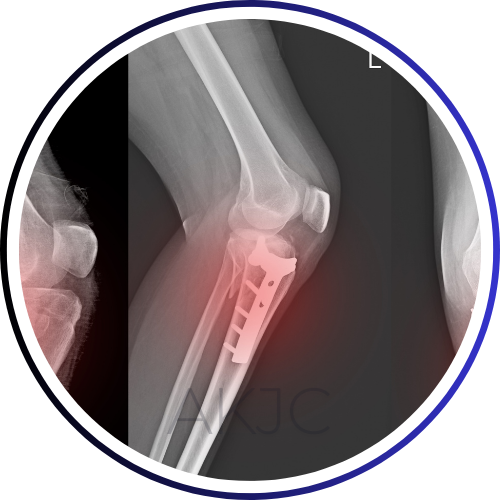
- Plates and screws.
- Intramedullary nails.
- External fixation.
- Joint surface reconstruction.
Healing and rehabilitation
Good recovery needs both bone healing and movement restoration.
Follow-up
- Wound and implant review.
- X-ray monitoring.
- Weight-bearing progression.
- Seek prompt review for increasing cast pain, numbness, cold fingers or toes, or a wet or damaged cast.
Special groups
- Children need growth-plate awareness.
- Elderly patients need fall-risk and osteoporosis review.
- Joint fractures need stiffness prevention.
Healing Problems and Reconstruction
Choose the resource that matches your diagnosis or treatment question.
Ilizarov and rail fixator care
- For non-union, infected non-union, deformity correction, limb lengthening and bone transport planning.
Open Ilizarov page
Fracture not healing
- For delayed union, non-union fracture, failed fixation and bone grafting discussion.
Open non-union page
Bone Infection and Deformity
Choose the resource that matches your diagnosis or treatment question.
Osteomyelitis treatment
- For chronic bone infection, infected fracture, discharge, sinus and infected non-union planning.
Open infection page
Limb deformity correction
- For malunion, post-traumatic deformity, bow leg, knock knee, shortening and alignment problems.
Open deformity page
Fresh Injury and Implant Review
Choose the resource that matches your diagnosis or treatment question.
Fracture doctor near me
- For fresh injury, accident fracture, haddi doctor and bone fracture doctor consultation.
Open fracture doctor page
Plate, screw, nail or rod removal
- For painful, prominent or irritating orthopedic implants after fracture healing.
View implant removal
Joint Fractures and Trauma
Choose the resource that matches your diagnosis or treatment question.
Joint fractures
- Intra-articular fractures around knee, ankle, elbow, wrist and hip socket need careful alignment.
View joint fractures
Trauma and accident care
- Orthopedic planning after falls, road traffic accidents and high-energy injuries.
View trauma care
Fracture Guides by Area and Age
Use regional guides alongside the diagnosis given after examination.
Book Consultation
Discuss Your Fracture Care Plan
Bring available X-rays, injury or operation records and your current medicine list. Treatment and recovery are planned for the individual fracture.