
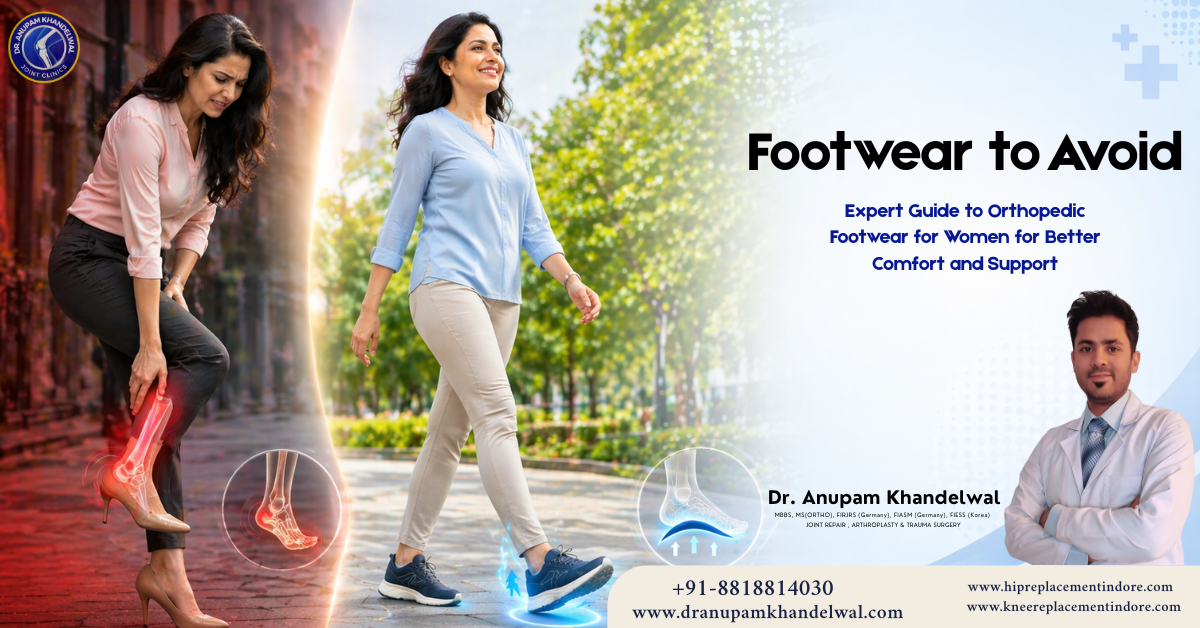
Foot pain is something many women silently live with—whether it’s heel pain, discomfort after long standing hours, or knee strain linked to improper support.
This is where Orthopedic footwear for women plays a crucial role. It is not just about comfort—it directly impacts your foot health, posture, and joint function.
How to Know Your Foot Type at Home
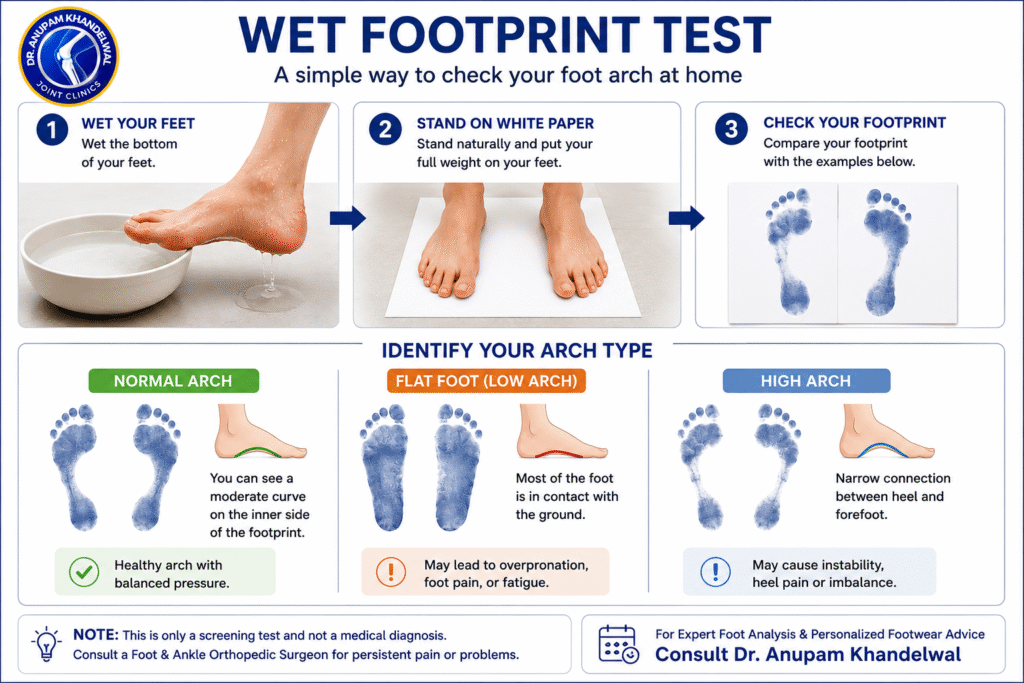
You can perform a few simple checks before buying new shoes.
The wet footprint test is one of the easiest methods.
These home assessments are useful but do not replace a professional orthopedic evaluation.
- Wet your feet and step onto a piece of paper.
- A broad footprint may indicate flat feet, while a narrow connection between the heel and forefoot may suggest a high arch.
- Measure both feet while standing, as one foot is often slightly larger than the other.
- Finally, pay attention to where you experience pain—heel pain, arch pain, forefoot pain, or toe discomfort often provides clues about the type of footwear that may suit you.
Next, inspect your old shoes.
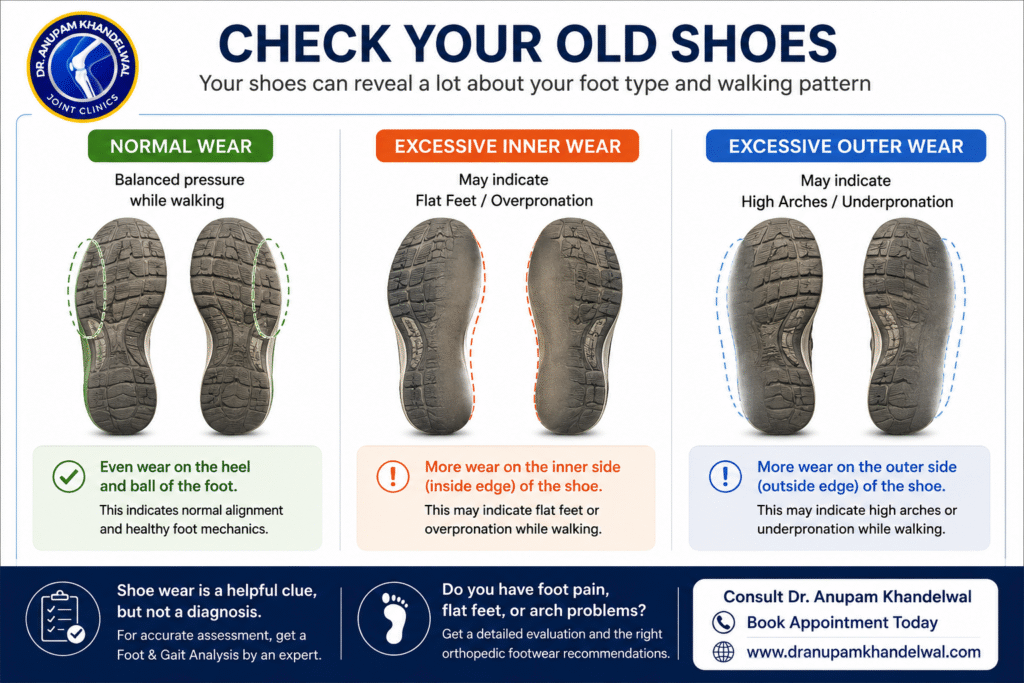
Uneven wear patterns may indicate changes in walking mechanics or foot alignment.
Observe Your Foot Arch
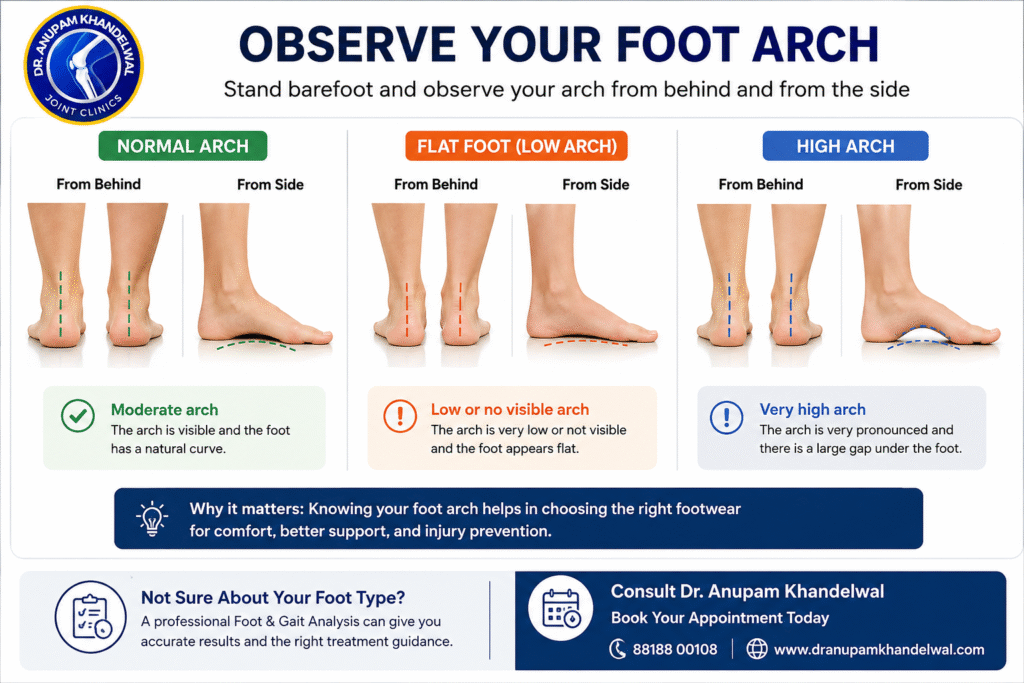
b
Why Footwear Matters More Than You Think ?
Footwear is the foundation of your body’s alignment. Poor choices can lead to multiple issues such as:
- Heel pain and plantar fasciitis
- Knee pain due to improper shock absorption
- Back pain caused by poor posture
- Corns, bunions, and toe deformities
On the other hand, proper orthopedic footwear helps distribute pressure evenly, reduces strain, and improves walking mechanics.
Understand Your Foot Anatomy Before Choosing the Best Orthopedic Footwear for Women
Your feet are made up of bones, joints, ligaments, muscles, and soft tissues that work together to support your body.
Small differences in foot anatomy can significantly affect the type of footwear you need.
For example, women with flat feet (Pes Planus) may benefit from shoes that provide good stability, while those with high arches (Pes Cavus) often require better cushioning to absorb impact.
Foot width also matters—a narrow shoe can worsen bunions, corns, and hammer toes, whereas a wide toe box allows the toes to move naturally.
Existing conditions such as plantar fasciitis, arthritis, diabetes, or previous foot injuries should also be considered when selecting footwear.
Best Orthopedic Footwear for Women for Pain-Free Walking
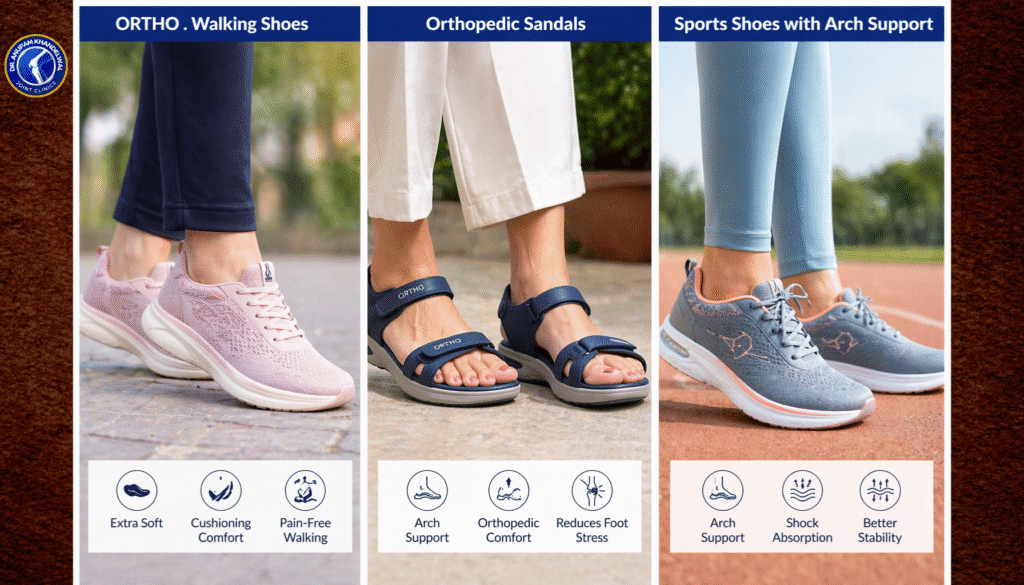
1. Walking Shoes
These are the most recommended option for daily use. They provide full support, cushioning, and stability. Women dealing with knee or heel pain benefit the most from this category.
2. Orthopedic Sandals
Ideal for Indian weather conditions, these are breathable and comfortable. They are perfect for home use or short outdoor activities.
3. Sports Shoes with Arch Support
For active women, these offer both flexibility and protection. They are useful for exercise and long-distance walking.
4. Customized Insoles
In some cases, adding orthopedic insoles to regular shoes can also provide relief.
When Should You Consult a Foot & Ankle Orthopedic Surgeon?
Not sure which footwear is right for your feet? Don’t rely on guesswork or online advice alone.
A Foot & Ankle Assessment by Dr. Anupam Khandelwal can help identify your foot type, arch pattern, walking (gait) mechanics, pressure points, and any underlying orthopedic condition that may be causing pain or discomfort.
During your consultation, you may receive guidance on:
- Foot and gait analysis
- Flat feet, high arches, bunions, heel pain, and other foot conditions
- The best orthopedic footwear for your foot type
- Whether you need custom insoles or orthotics
- Non-surgical and advanced treatment options, if required
Book Your Consultation With Dr. Anupam Khandelwal
📍 In-Clinic Consultation (Indore) – Directly call on 881-881-4030
💻 Video Consultation Available Across India & Internationally
Can’t visit the clinic? Schedule a video consultation and receive expert guidance from the comfort of your home.
Simply share:
- Clear photographs of both feet (front, side, back, and while standing)
- Images of your current footwear
- Previous X-rays, MRI scans, or medical reports (if available)
Dr. Anupam Khandelwal will review your case and advise whether you need a change in footwear, custom orthotics, physiotherapy, further investigations, or an in-person evaluation.
📞 To book a Video Consultation, call or WhatsApp: 881-881-4030
🌐 You can also book your In-Clinic or Video Consultation directly through our website using the “Book Appointment” option.
High Heels and Foot Health
High heels shift body weight toward the front of the foot, increasing pressure on the forefoot and toes. Frequent or prolonged use may contribute to bunions, metatarsalgia, heel pain, and discomfort in the knees or lower back, particularly in susceptible individuals.
If you wear high heels, choose a moderate heel height, a wider heel base, and a roomy toe box. Alternating high heels with supportive footwear can also help reduce excessive stress on the feet.
Orthopedic Surgeon's Checklist for Buying the Right Shoe
Before purchasing footwear, remember these simple tips:
- Measure both feet and choose the size that fits the larger foot.
- Shop later in the day when your feet are naturally slightly larger.
- Ensure there is adequate space in front of your longest toe.
- Check that the heel fits securely without slipping.
- Walk in the shoes before buying them.
- Avoid shoes that feel tight, expecting them to stretch later.
- Replace worn-out footwear regularly to maintain support and comfort.
What is Orthopedic Footwear for Women?
Orthopedic footwear is specially designed to support the natural structure of the foot. Unlike regular shoes, these focus on:
- Arch support
- Cushioning and shock absorption
- Proper alignment of foot and ankle
- Reduced pressure on sensitive areas
This makes them ideal not only for patients with pain but also for women who want to prevent future problems.
Footwear is the foundation of your body’s alignment. Poor choices can lead to multiple issues such as:
- Heel pain and plantar fasciitis
- Knee pain due to improper shock absorption
- Back pain caused by poor posture
- Corns, bunions, and toe deformities
On the other hand, proper orthopedic footwear helps distribute pressure evenly, reduces strain, and improves walking mechanics.
Key Features to Look For
Choosing the right pair requires attention to a few important details.
1. Arch Support
Proper arch support prevents excessive strain on the foot. It is especially helpful for flat feet or high arches.
2. Cushioning
Soft cushioning reduces impact while walking. This is important for women who stand for long hours.
3. Heel Height
A slight heel (1–3 cm) is ideal. Completely flat footwear can increase stress on the heel.
4. Wide Toe Box
Shoes should allow your toes to move freely. Tight footwear often leads to bunions and pain.
5. Anti-Slip Sole
Safety is equally important, especially for elderly women or post-surgery patients.
Footwear to Avoid
While choosing the right footwear is important, avoiding the wrong ones is equally critical.
- High heels (more than 2–3 inches)
- Flat chappals without support
- Tight or pointed shoes
- Hard soles with no cushioning
Such footwear can worsen conditions like plantar fasciitis and lead to long-term joint problems.
Advanced Non-Surgical Treatments Available
For selected patients with chronic musculoskeletal pain, Dr. Anupam Khandelwal Joint Clinics also offers advanced physiotherapy technologies that may be included as part of a comprehensive rehabilitation program.
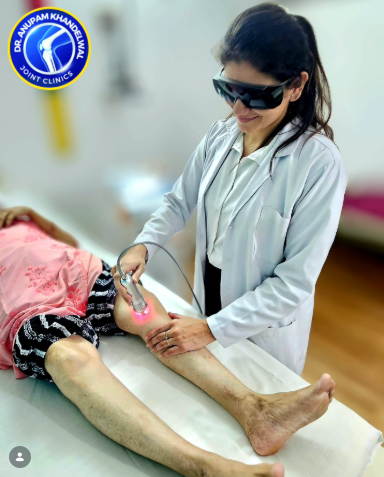
High-Intensity Laser Therapy
High-intensity laser therapy is used in physiotherapy to help reduce pain and support the body’s natural healing response in selected soft tissue and musculoskeletal conditions. Depending on the diagnosis, it may be considered for conditions such as:
- Plantar fasciitis
- Achilles tendinopathy
- Heel pain
- Ankle ligament injuries
- Tendon inflammation
- Chronic foot pain
TECAR Therapy
TECAR (Transfer of Energy Capacitive and Resistive) therapy uses radiofrequency energy to support tissue healing and rehabilitation. When appropriate, it may be incorporated into treatment plans for:
- Chronic foot pain
- Heel pain
- Ankle pain
- Sports injuries
- Soft tissue inflammation
- Post-operative rehabilitation
Both therapies are used only after a proper clinical evaluation and are typically combined with footwear advice, exercises, and physiotherapy rather than used as standalone treatments.
Who Should Use Orthopedic Footwear?
Orthopedic footwear is beneficial for:
- Women with heel or foot pain
- Patients recovering from surgery
- Elderly individuals
- Working professionals who stand for long hours
- Women with diabetes or joint issues
Even if you don’t have pain, preventive use can help maintain long-term foot health.
Practical Tips for Daily Use
- Always try footwear in the evening when feet are slightly swollen
- Replace worn-out shoes regularly
- Avoid walking barefoot on hard surfaces
- Combine good footwear with stretching exercises
Small changes in daily habits can make a big difference.
About Dr. Anupam Khandelwal
Dr. Anupam Khandelwal is an orthopedic surgeon based in Indore, specializing in joint replacement and advanced bone care.
He treats knee, hip, and foot problems with a focus on faster recovery and better mobility.
Patients from all over MP Seek his care.
He emphasizes personalized treatment and preventive orthopedics for long-term relief.
FAQs
1. Are orthopedic shoes necessary for daily use?
Yes, especially if you experience foot or knee pain. They can also be used for prevention.
2. Can orthopedic footwear cure heel pain?
They help reduce strain and support healing, especially in conditions like plantar fasciitis.
3. Are sandals good for foot pain?
Orthopedic sandals with proper support are beneficial for mild pain and daily comfort.
4. How often should I change my footwear?
Ideally every 8–12 months, depending on usage.
हिंदी सारांश
महिलाओं में पैरों का दर्द अक्सर गलत फुटवियर की वजह से होता है। सही Orthopedic footwear for women पहनने से एड़ी, घुटनों और कमर के दर्द में राहत मिलती है। ऐसे जूते जिनमें आर्च सपोर्ट, कुशनिंग और सही फिट हो, वे पैरों के लिए बेहतर होते हैं। हाई हील्स और फ्लैट चप्पल से बचना चाहिए। सही फुटवियर अपनाने से दर्द कम होता है और चलना आसान हो जाता है।
Swahili Summary
Wanawake wengi hupata maumivu ya miguu kutokana na viatu visivyofaa. Kutumia Orthopedic footwear for women husaidia kupunguza maumivu ya kisigino, magoti na mgongo. Viatu vyenye msaada wa upinde wa mguu na laini ya kutosha husaidia kutembea bila maumivu. Epuka viatu virefu sana au visivyo na msaada.