
Case story | Shoulder fracture non-union
Non-union of lateral end clavicle fracture after previous fixation
A patient from Dhar had a lateral end clavicle fracture treated surgically elsewhere. Four months later, the fracture had not united and the fixation had become unstable. The case was evaluated and treated by Dr. Anupam Khandelwal with revision fixation and bone grafting.
Quick case summary
What happened in this case?
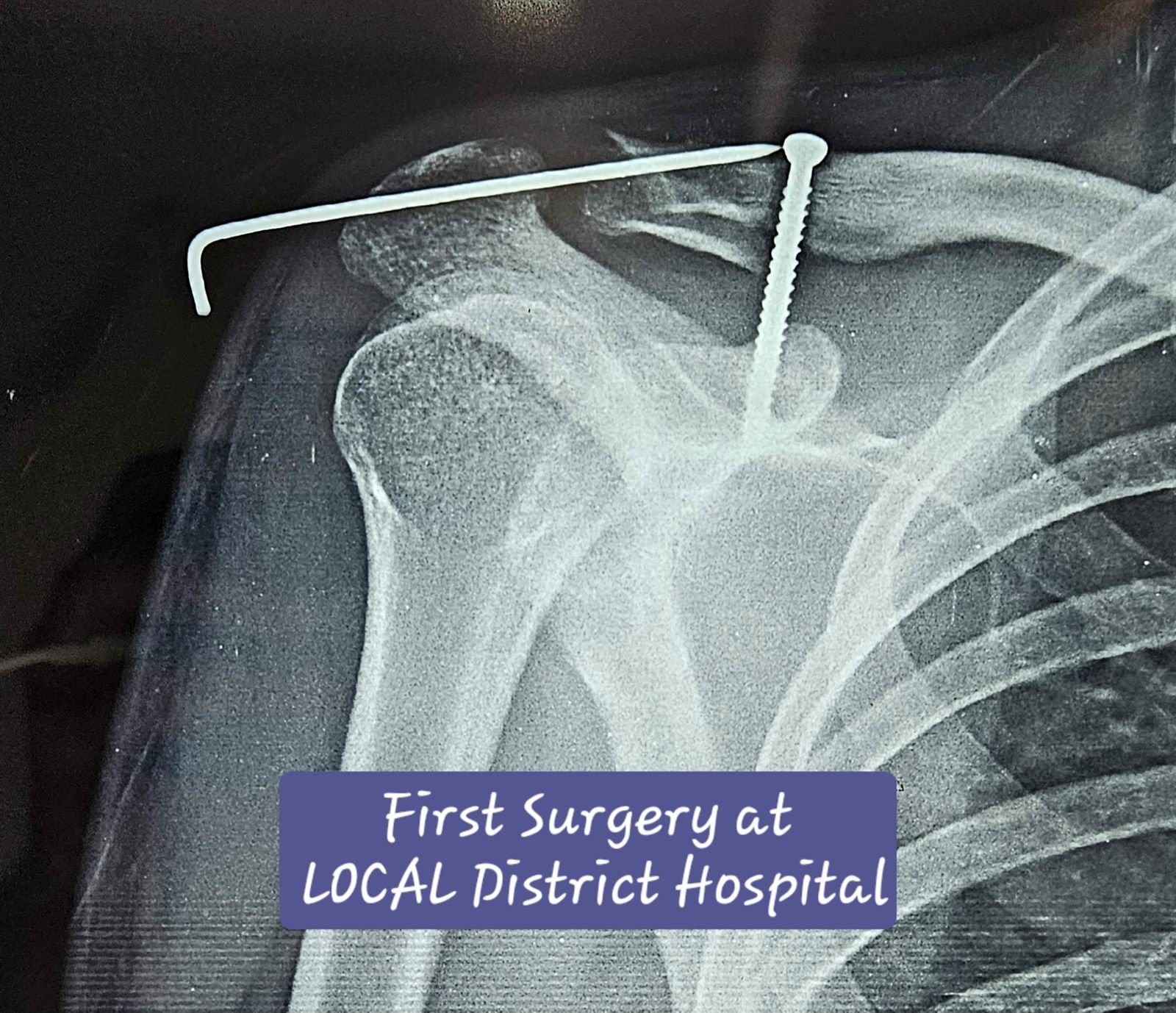
Lateral end clavicle fracture treated surgically outside Indore.
Persistent non-union with unstable fixation and loose clavicle-to-coracoid screw.
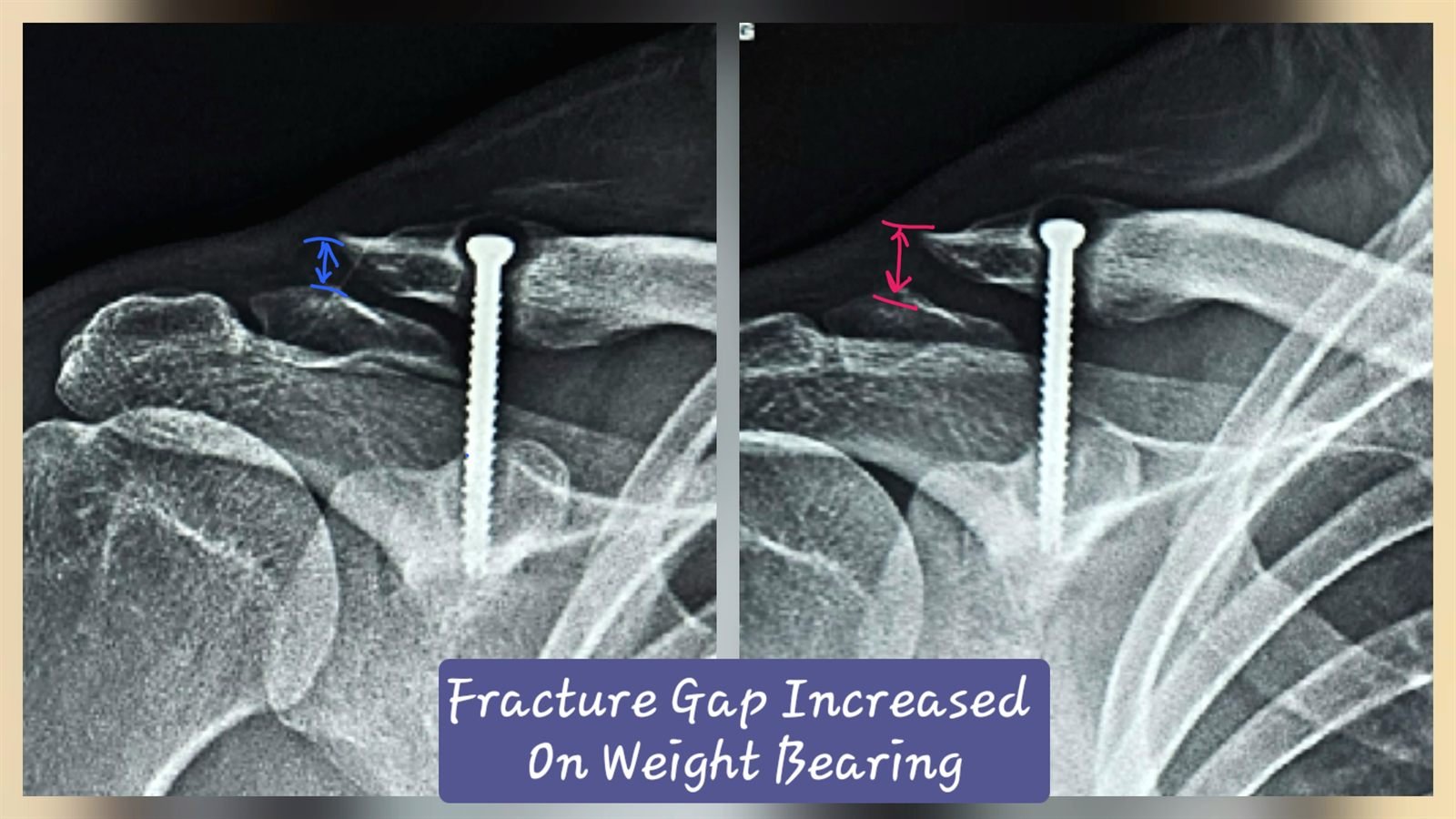
Weight-bearing X-rays showed the fracture ends separating under load.
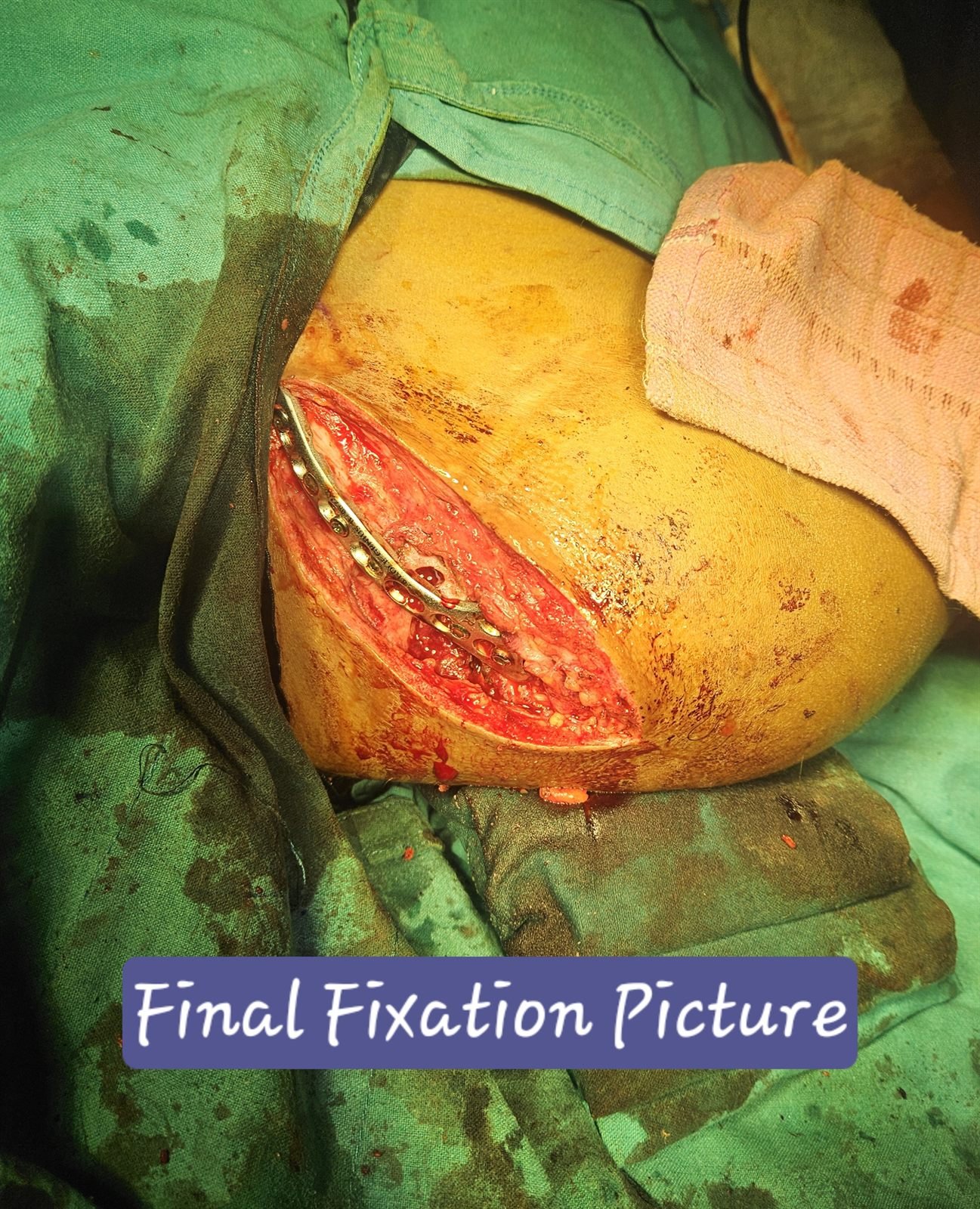
Loose screw removal, freshening of bone ends, curettage, lateral clavicle plate fixation and bone grafting.
Treatment journey
From failed fixation to revision surgery
Fracture and first surgery
The patient had a lateral end clavicle fracture and underwent fixation at a local district hospital.
Pain and delayed healing
Four months later the fracture had not united and the implant construct was clinically concerning.
Dynamic X-ray assessment
Weight-bearing X-rays showed separation of the fracture ends, confirming instability at the non-union site.
Revision fixation and grafting
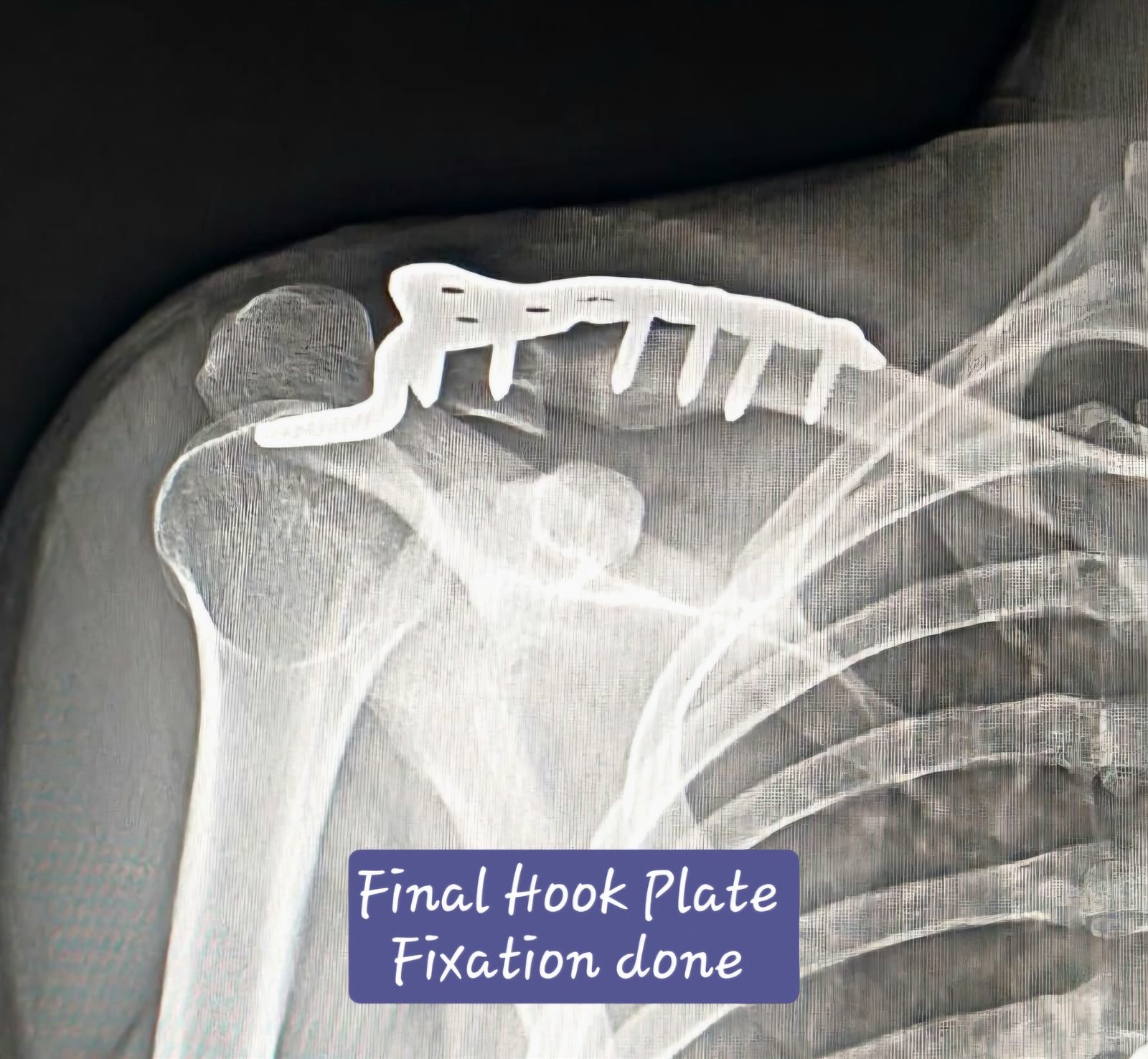
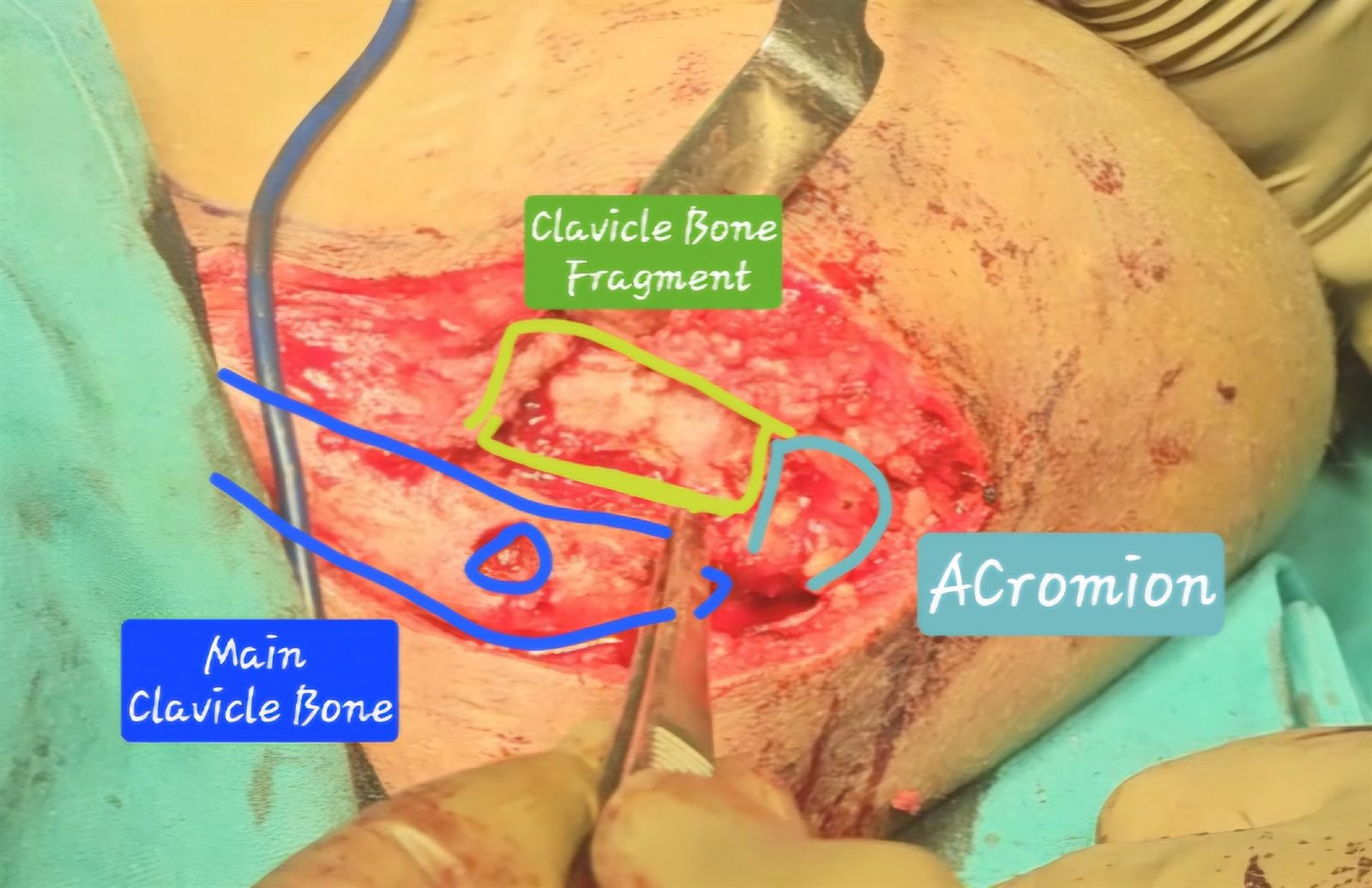
The loose screw was removed, the non-union was prepared, plate fixation was done and bone graft was added.
Why this case needed a second look?
Lateral end clavicle fractures are close to the acromioclavicular joint and the coracoclavicular ligament complex. Because of this anatomy, some fractures behave like an unstable shoulder-girdle injury rather than a simple collarbone fracture.
In this case, the patient continued to have pain and difficulty using the right shoulder after the first operation. Fresh clinical assessment and stress X-rays were needed to understand whether the fracture was stable.
Weight-bearing X-rays showed instability
Dr. Khandelwal advised weight-bearing comparison X-rays. When the patient lifted weight with the right hand, the fracture gap increased. This dynamic separation suggested non-union with unstable fixation. The clavicle-to-coracoid screw was also loose.
Revision surgery plan
The surgery was planned as a revision procedure. The loose screw was removed, the fracture margins were freshened, dead bone and fibrous tissue were curetted, and the fracture was fixed with a lateral clavicle plate. Bone graft was added to improve the biology of healing.
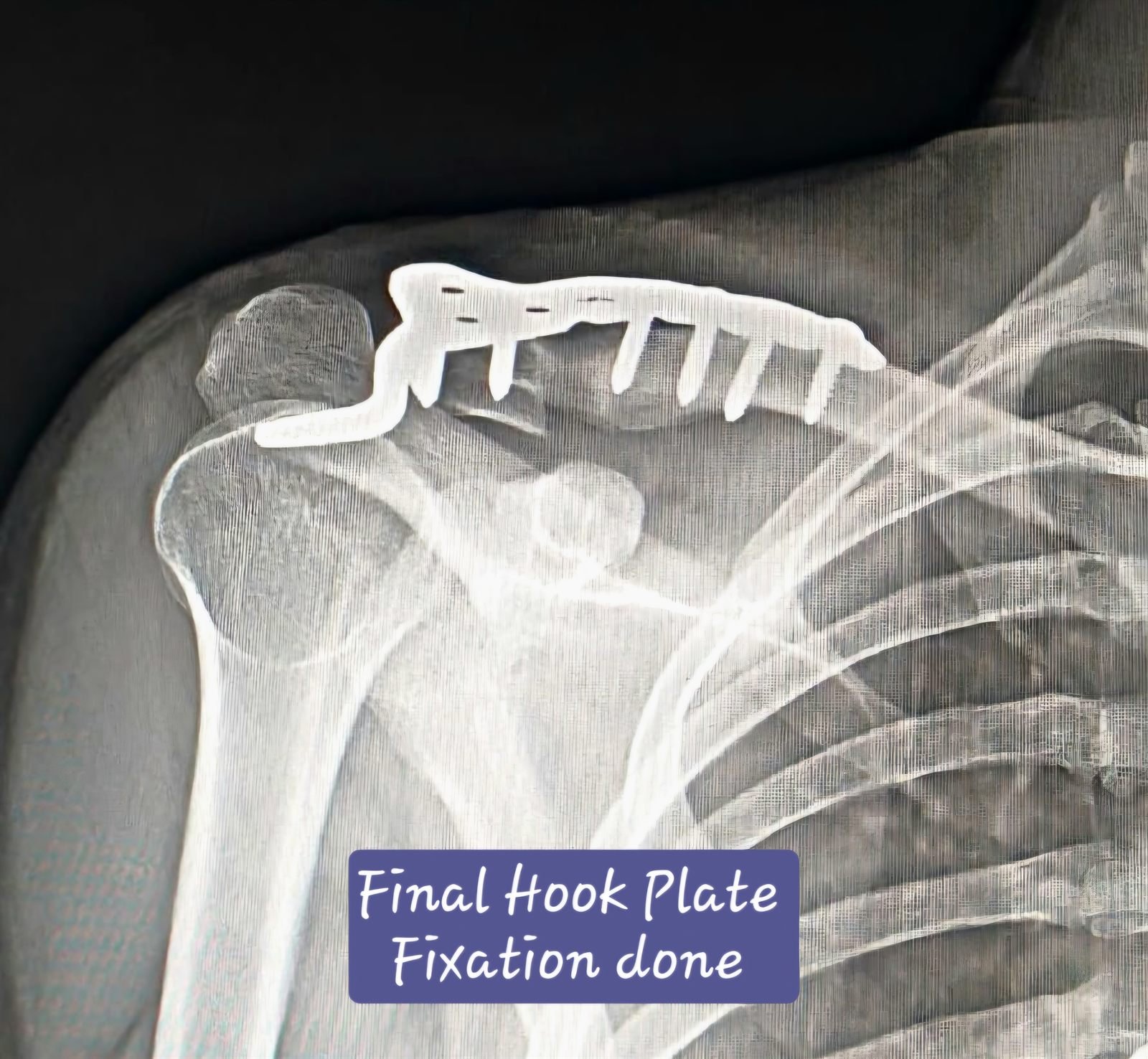
Post-operative X-ray
The final X-ray showed stable plate fixation and improved alignment of the lateral clavicle fracture. Rehabilitation and follow-up are planned according to fracture healing, pain, shoulder motion and X-ray progress.
Patient learning from this case
- Persistent pain months after clavicle surgery should be reassessed with fresh X-rays.
- Lateral end clavicle fractures may need special fixation because the outer fragment can be unstable.
- Stress or weight-bearing X-rays can reveal movement that is not obvious on a resting X-ray.
- Non-union treatment often needs both stable fixation and biological support such as bone grafting.
- Old operation notes, previous X-rays and implant details are helpful before revision surgery planning.
Patient guidance
When should an old fracture surgery be reviewed?
- Pain continues several months after fracture surgery.
- X-ray shows a persistent gap or no progressive healing.
- An implant looks loose, broken or painful.
- Shoulder movement, lifting or daily use remains limited.
- The fracture site feels unstable or symptoms are worsening.
Common questions
FAQs about clavicle non-union and revision surgery
Can a clavicle fracture non-union heal without another surgery?
Some delayed unions can be observed, but a painful unstable non-union, loose implant or widening fracture gap often needs specialist reassessment. Surgery is considered when stability and biology are not enough for healing.
Why is bone graft added in non-union surgery?
Bone graft can improve the biology of healing by adding fresh bone-forming material around a prepared non-union site. It is commonly used when old dead bone or fibrous tissue has been removed.
Why are weight-bearing X-rays useful in lateral clavicle fractures?
A resting X-ray may not show the full instability. Weight-bearing or stress views can show whether the bone ends separate when the shoulder girdle is loaded.
What should a patient bring for failed implant or non-union review?
Bring old X-rays, latest X-rays, discharge summary, implant details, previous prescriptions and any CT scan or blood reports available.
Plan your visit
Helpful links for patients
About Dr. Anupam Khandelwal
Know the surgeon, training background, clinical focus and treatment approach before planning a consultation.
Our Clinic Locations
Check AKJC clinic locations, contact routes and nearby consultation options for patients from Indore and nearby cities.
Book Surgery
Share reports and previous X-rays so the team can guide appointment timing, hospital pathway and surgery planning.
Bring These Reports
Old and current X-rays, discharge summary, implant details, CT scan or blood reports help plan a safer review.
Need review for an old fracture or failed implant?
Bring old X-rays, current X-rays, discharge summary and implant details so the problem can be assessed properly.